Reframing MODIGLIANI, Portrait of Jean Cocteau, 1916, from the Pearlman Collection to Los Angeles County Museum of Art
Posted: 19 Mar 2026 by PML
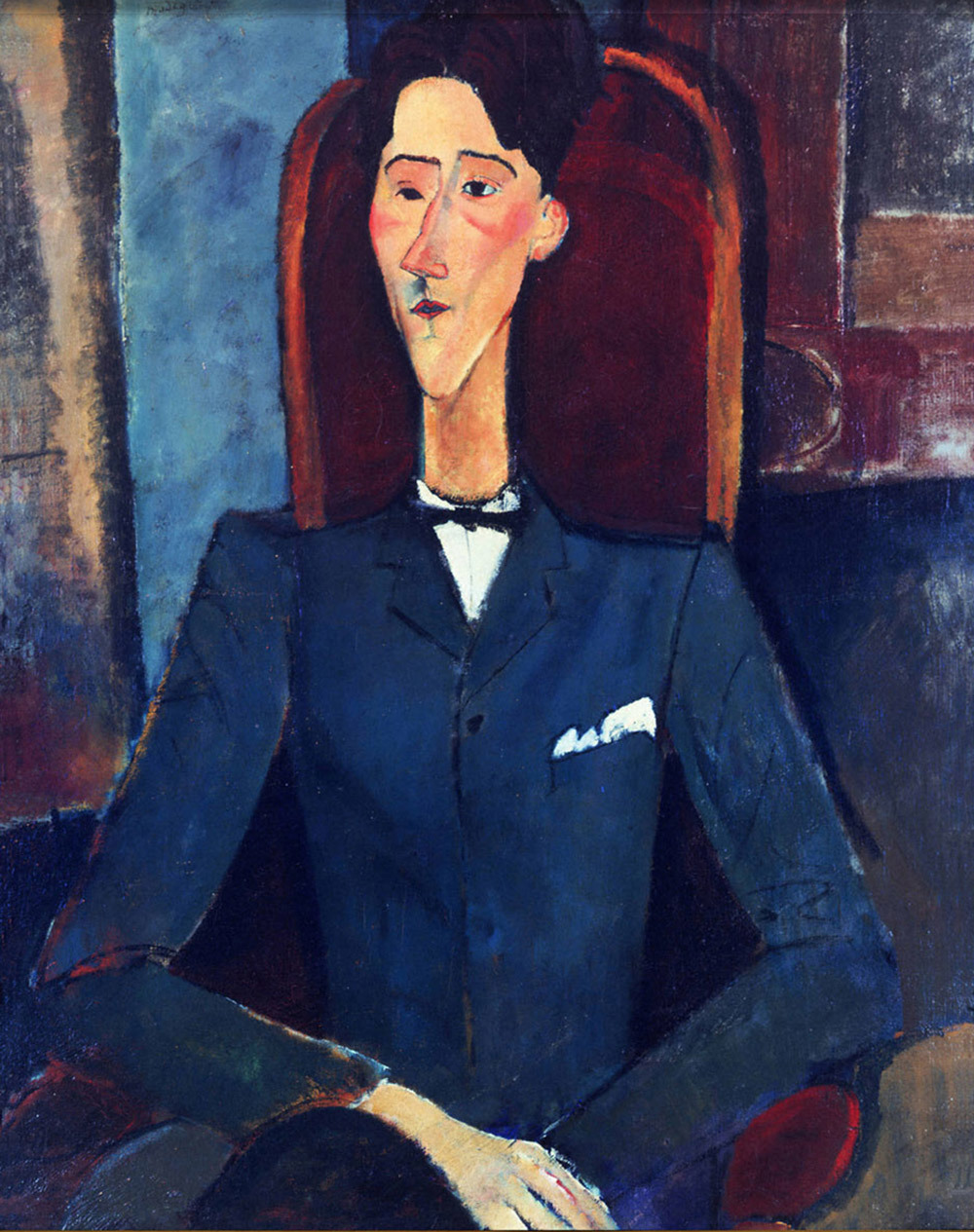
Amedeo Modigliani (1884-1920), Portrait of Jean Cocteau, 1916, o/c, 100.4 x 81.3 cm., gift from the Pearlman Collection to Los Angeles County Museum of Art
Modigliani was thirty-two when he painted this strikingly percipient portrait of the playwright, artist and poet, Jean Cocteau, who was himself only twenty-seven, but had already published three volumes of poetry and driven an ambulance in the first World War. Cocteau's precocious sense of self and assurance in his own creativity is laid rather mercilessly open by Modigliani, in contrast to the earlier and far more romantic portrait by Federico de Madrazo y Ochoa.
Its roots may lie perhaps in the artist's early training in Florence, since the compositions of Mannerist portraits, together with the abstracted and elongated forms of Cycladic sculpture seem to have influenced the sitter's slightly arrogant pose, the long oval of his face and the wedge-like nose. Perhaps Modigliani observed that this self-possessed young man, known after one of his own books as 'le Prince frivole', consciously bore himself like a Renaissance nobleman, since the whole work can be read as a reversal of Vasari's portrait of Alessandro de' Medici, duke of Florence.
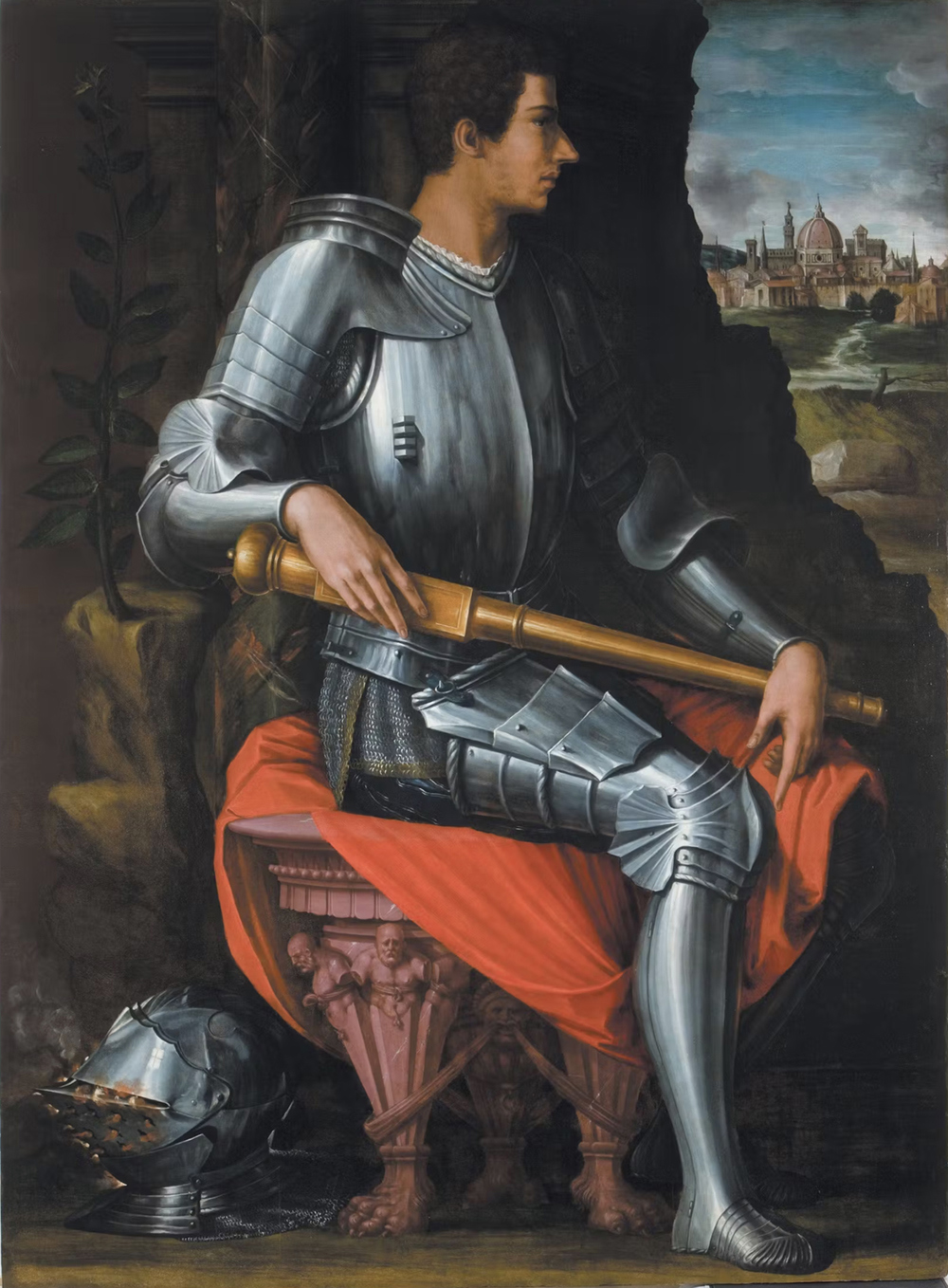
Giorgio Vasari (1511-74), Portrait of Alessandro de' Medici, 1534, o/panel, 157 x 114 cm., Gallerie degli Uffizi (acq. 1890)
Both men are clad in blue or blueish armour (actual or assumed); they sit in chairs covered in red fabric, against sternly linear backgrounds which open onto blue skies; they are dark-haired, with pointed features, small narrow eyes, long slender hands, and an unassailably proud bearing. There is an element of caricature in such a revealing portrayal and perhaps it grated on Cocteau, who paid for it, never took it home, and later declared that, 'It does not look like me...'
The portrait made its way through several collections in Paris, until by the middle of the century it had arrived in New York, and in 1951 was bought by Henry Pearlman, later entering the Henry and Rose Pearlman Foundation. The Pearlman Collection has now been given to the Brooklyn Museum, the Museum of Modern Art, and - in this case - to LACMA, the Los Angeles County Museum of Art.
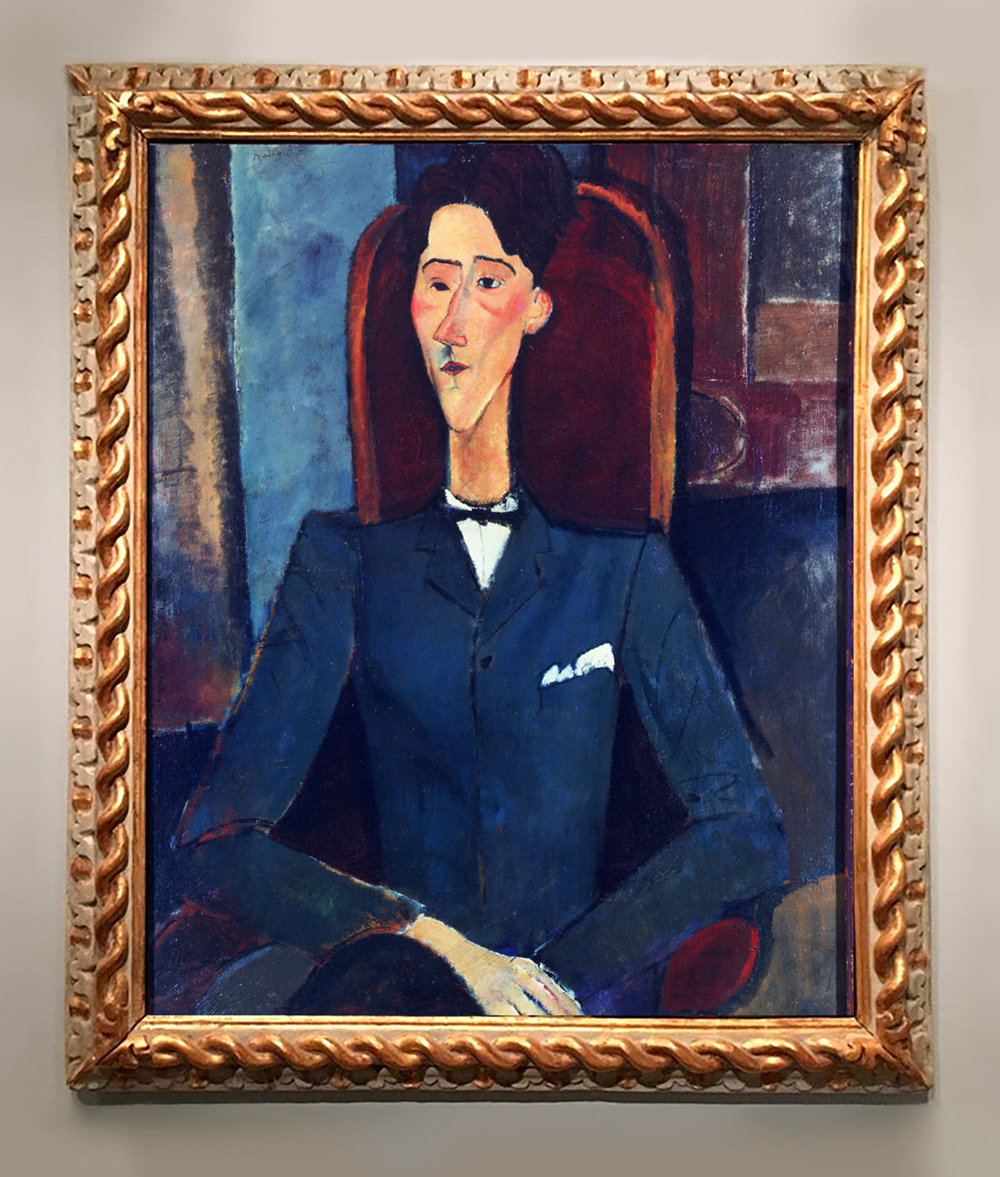
Modigliani, Portrait of Jean Cocteau in its previous frame
In order to celebrate the exhibition of the entire collection before the individual paintings set out to their various destinations, it was decided to reframe Cocteau's portrait, since the setting it had acquired on its travels was somewhat out of key in the work of art as a whole. The challenge then was to decide on the most effective frame to suit the portrait in style and era, and (importantly) to fit it most happily into the existing collection in the Museum.
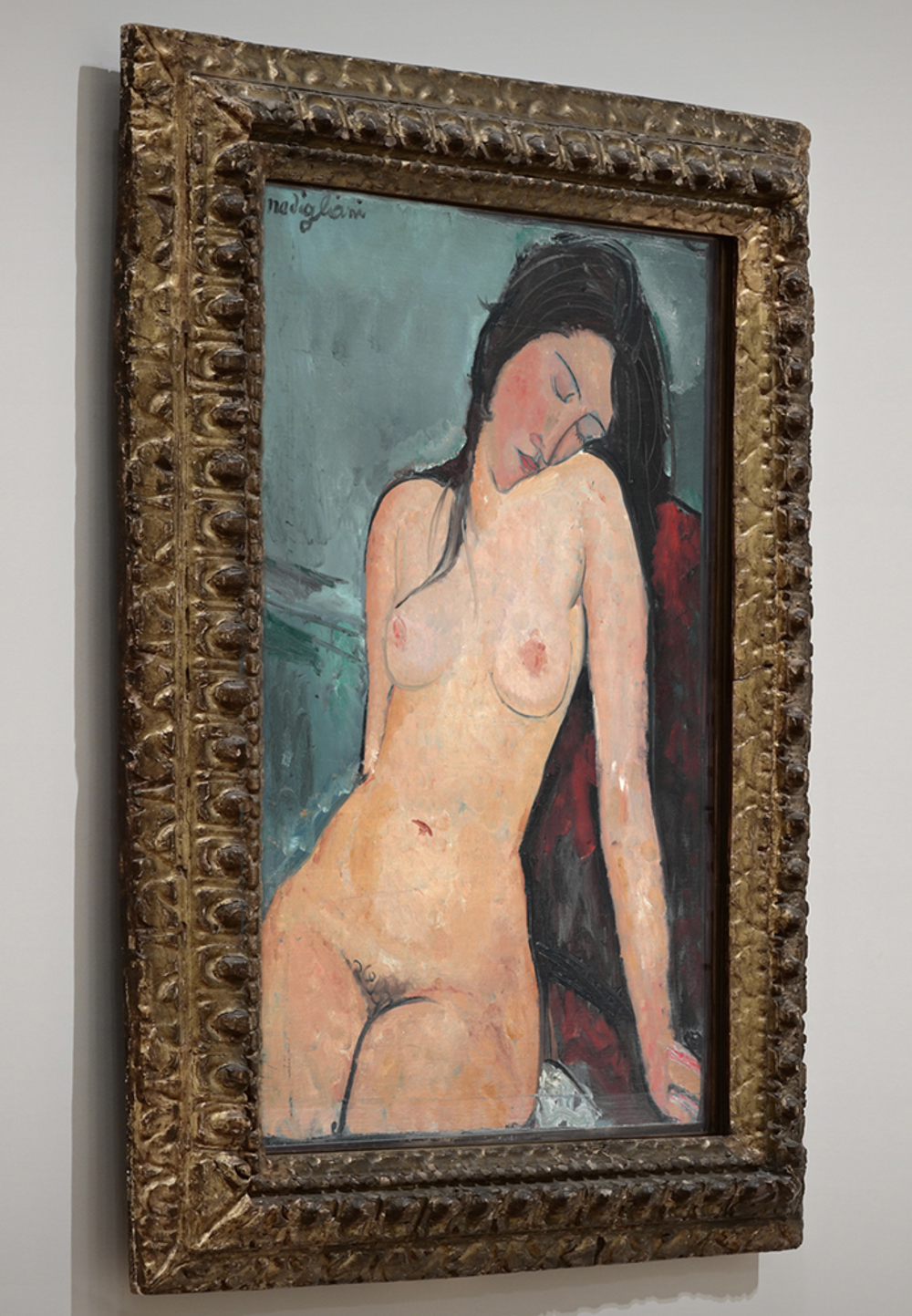
Modigliani (1884-1920), Nude, c.1916, o/c, 118.2 x 92.4 cm., The Courtauld Gallery
Modigliani's work is displayed in institutions and exhibitions in a variety of settings, from barely-there modern strip frames or 19th and 20th century patterns, through different period styles, from Mannerist (at The Courtauld Gallery) and extremely unsuitable French Baroque frames with projecting corners and centres, to antique rectilinear mouldings.
Several alternative frames were offered by Paul Mitchell Ltd, focusing on the second half of the 19th and the early 20thcentury, since - although Modigliani's work may draw from ancient sources - this painting was not of a timeless nude nor a 16th century Renaissance prince, but an avant-garde man dressed in contemporary male fashion.
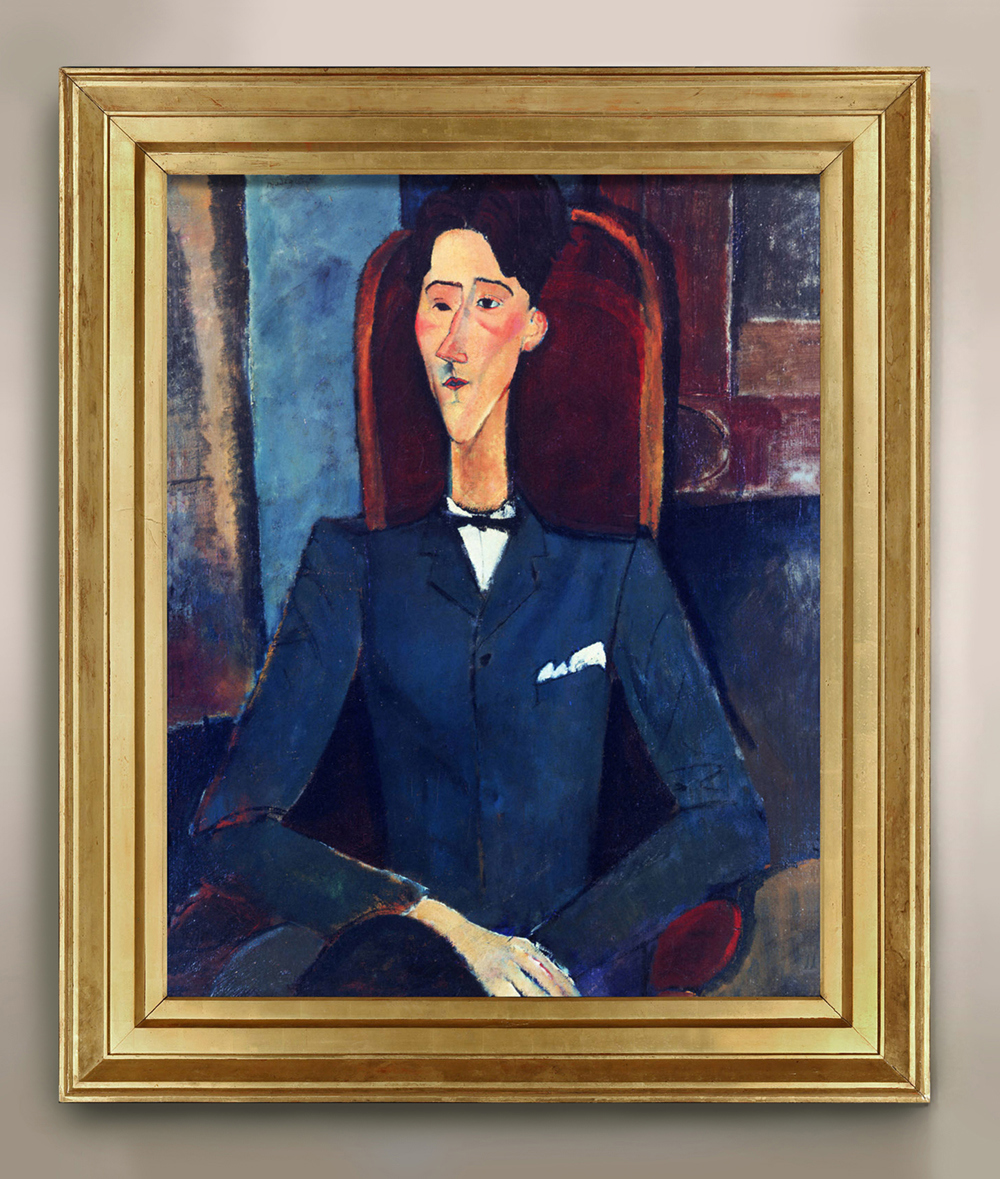
A rare late 19th-early 20th century Parisian artist's frame, with canted profile and stepped frieze, finished with original matte and burnished water gilding
In order to provide one possibility with overall gilding, a replica of this frame was offered (it was too large for the canvas, and too rare to cut down). It contrasts strikingly with the portrait, adding to its remarkable presence on the wall, but also closes in on the painted interior, trapping the figure of Cocteau in a slightly claustrophobic space.
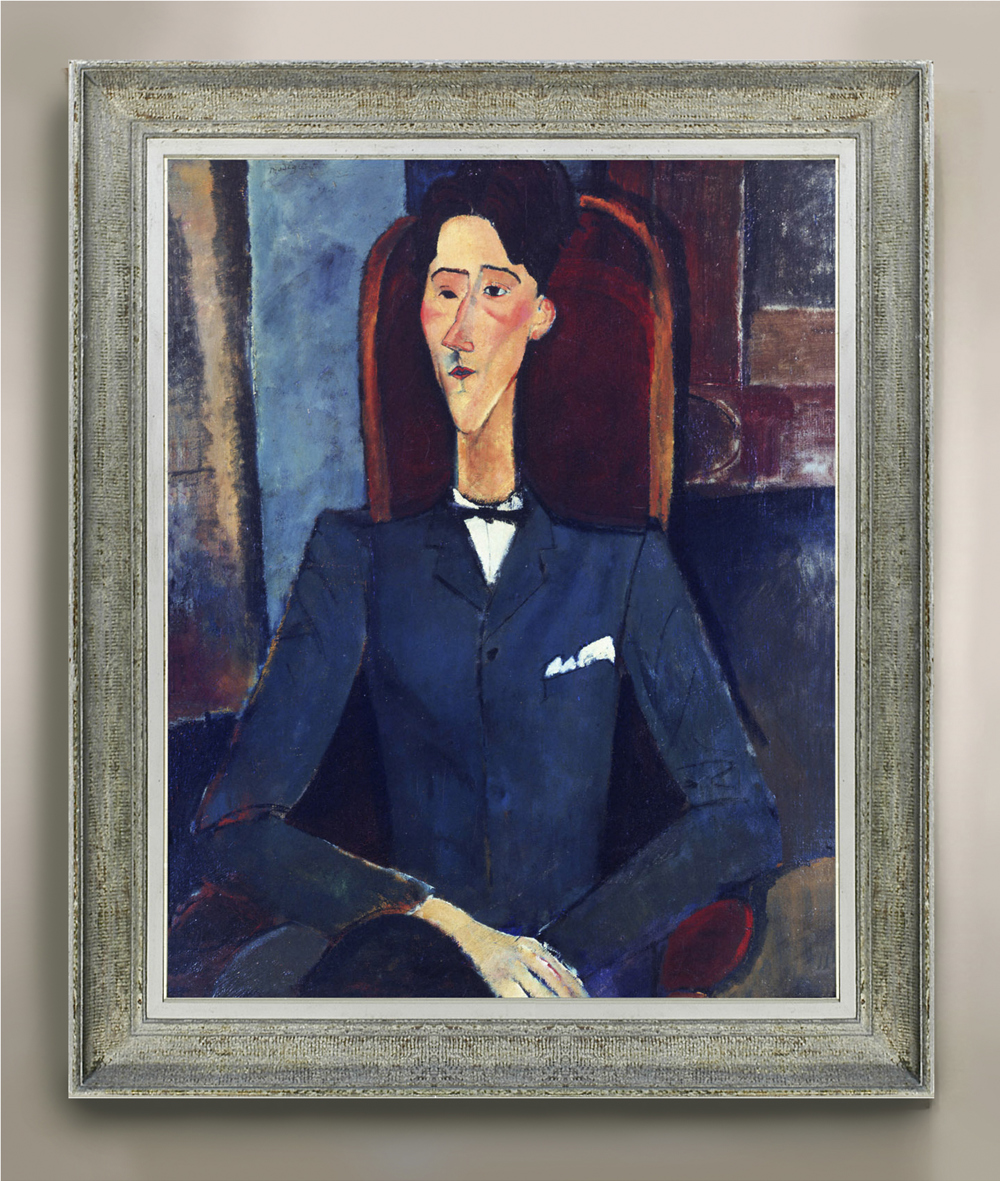
First quarter 20th century Belgian artist's frame, with concave profile, the scotia with fine fluting, finished with distressed gilding on a dark brown ground, the inlay painted pearl grey
This frame interestingly retained the maker's label: 'C. Artiges-Schleipper 43-47 rue Gray Bruxelles 4'. A replica was offered, as it was too small for the canvas. Unlike the rather assertive gilded frame above, this frame does not compete with the portrait, but reflects the sitter's self-presentation at a lower tonal level; it steps back from the high contrasts of the painting and provides a softer transition to the outer world, as well as an echo of the brushwork in the textured fluting of the hollow.
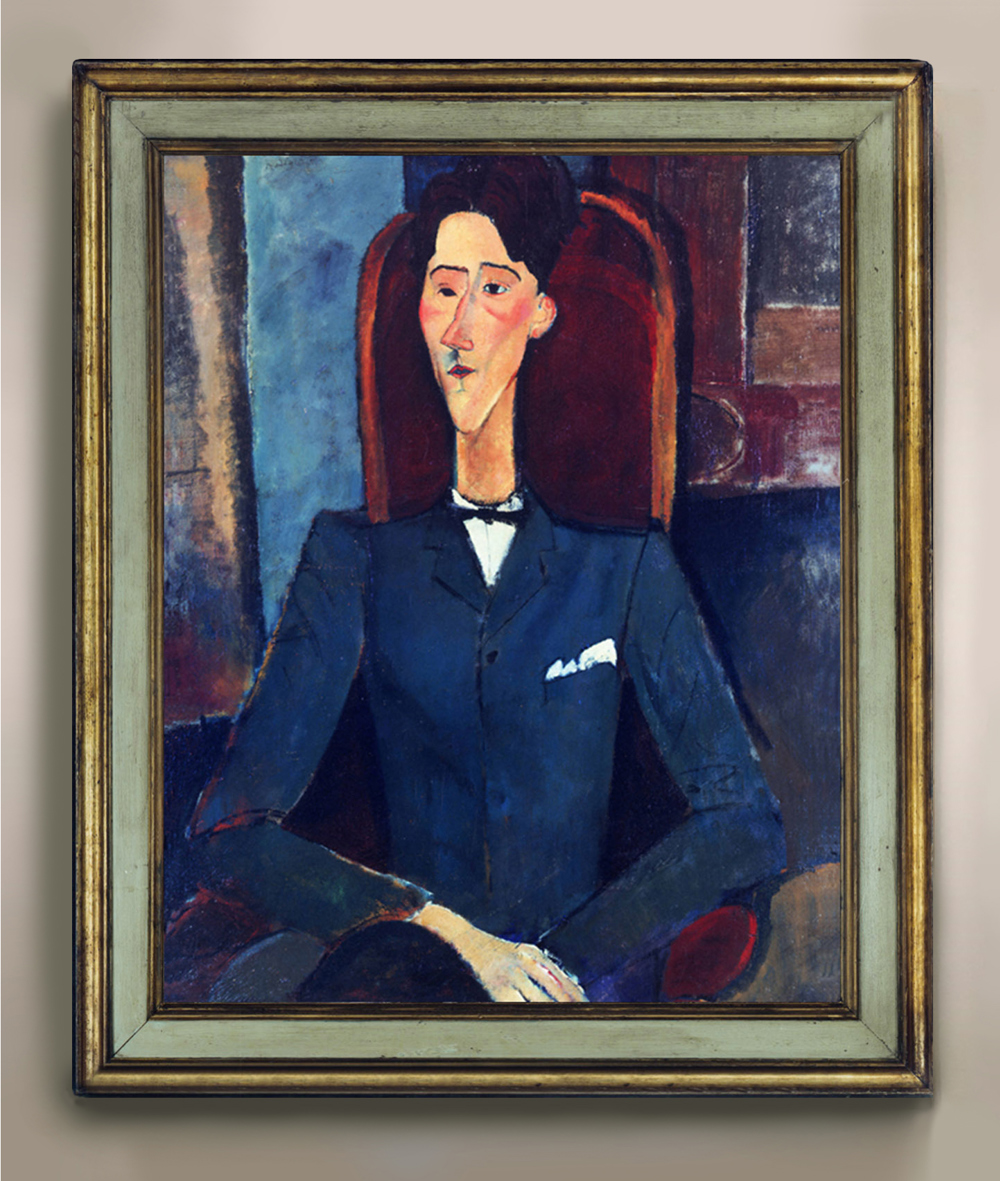
A rare early 20th century Parisian artist's frame, oak, with an entablature profile, finished with original lacquered silver leaf, the frieze painted celadon green
A choice which provides a foil to the colour scheme of the painting, the slender rails here echo the compositional lines and elongated forms of the latter: this is a frame which manages to be both unassertive in its dimensions, and paradoxically dramatic in its interaction with the portrait. Its source is in the rediscovery of painted frames in the last third of the 19th century, and perhaps particularly in a communal memory of the coloured frames used a quarter of a century earlier by the Impressionists at their exhibitions in 1879 and '80. In the second and third decades of the 20th century artists such as Kandinsky and Theo van Doesburg, German Expressionists including Kirchner, Heckel, Schmidt Rottluff and Emil Nolde, and Italian Futurists like Giacomo Balla, were all using painted frames in various degrees of rough or less rough finish. This more refined French version was also offered as a replica, since the original was too narrow and too tall.
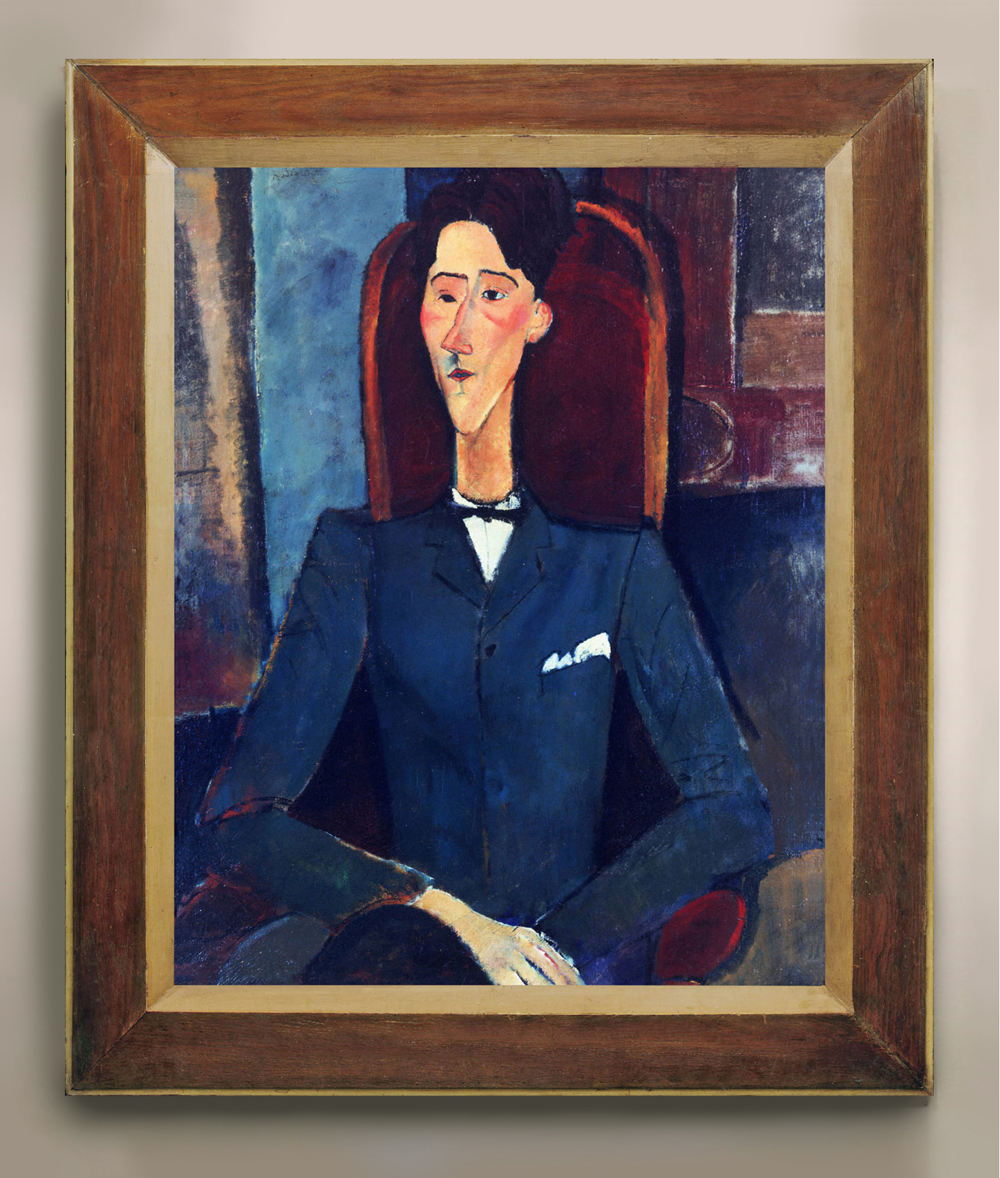
First quarter 20th century Parisian artist's frame with reverse canted profile in stained and polished oak, finished with water-gilding at the back edge and on the wide canted sight edge
This very beautiful reverse frame, with its frieze of grained oak sloping back to the wall, is a model of the kind of profile that artists such as Georges Braque preferred; known as a frame 'en fuite' it helped to project their early experiments in Cubism forward from the wall, adding to the sense of dynamism [1]. This pattern would have been current when Modigliani arrived in Paris in 1906 and met Picasso. It is perfect in terms of location and era, and perfect in itself - the combination of polished wood and gold, of simple planes and sharp lines - but clashes very slightly with Cocteau's proud formality, as well as in terms of juxtaposed colour.
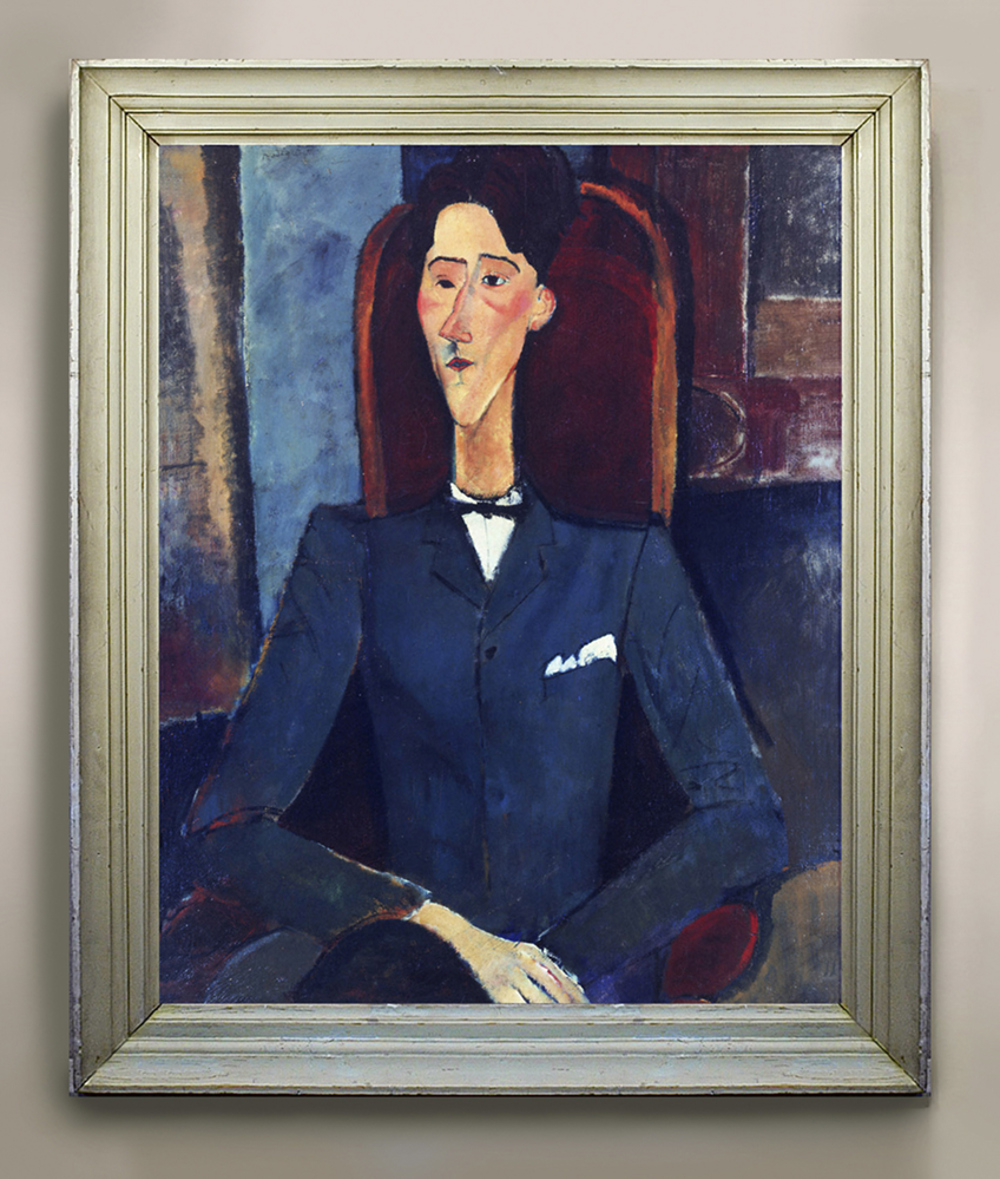
Early 20th century French or European artist's frame with concave profile and frieze, painted off-white and preserving original patina
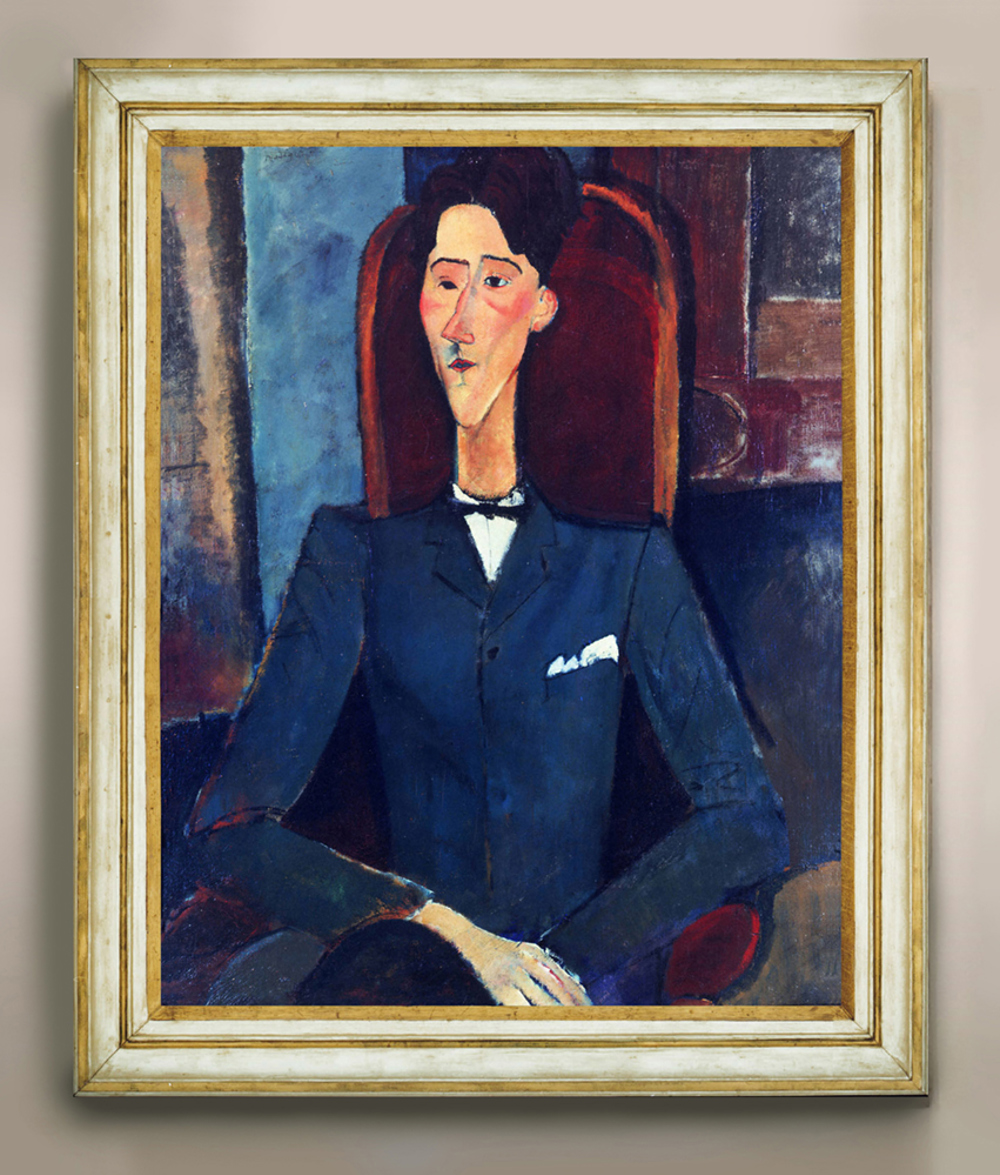
Early 20th century European artist's frame, oak, with concave profile and frieze, painted white and parcel gilt
The two frames above, although having points of similarity in their date, source, structure and finish, illustrate the variety of artists' painted and undecorated frames which proliferated from the 1870s until well into the 20th century. This was in contradistinction to the gilded and often highly ornamented frames which were the only frames permitted on exhibition submissions to the Paris Salon until 1884 (and then ebonized or dark stained wood were the only additional finishes allowed in) [1]. Artists such as Monet and Renoir understood the lure for collectors of golden borders hanging on Pompeiian red walls, and even the Impressionists' dealer and promoter, Durand-Ruel, refused to allow white frames into his galleries until 1883.
By the early 20th century, however, frames in almost every possible style were accepted, from antique Baroque and NeoClassical styles gilded overall and reproductions of these, through the simplest mouldings in all sorts of tone and colour, to unique designs created by the artist him- or her-self. Changing interior fashions began to bend public taste further towards plainer patterns, painted finishes, and colours or neutrals picked out with parcel gilding. These two off-white and white/gilded frames are probably what the modern dealer between the two World Wars would have wanted to see on contemporary works in his gallery, and probably what many innovative artists of the period would have accepted happily.
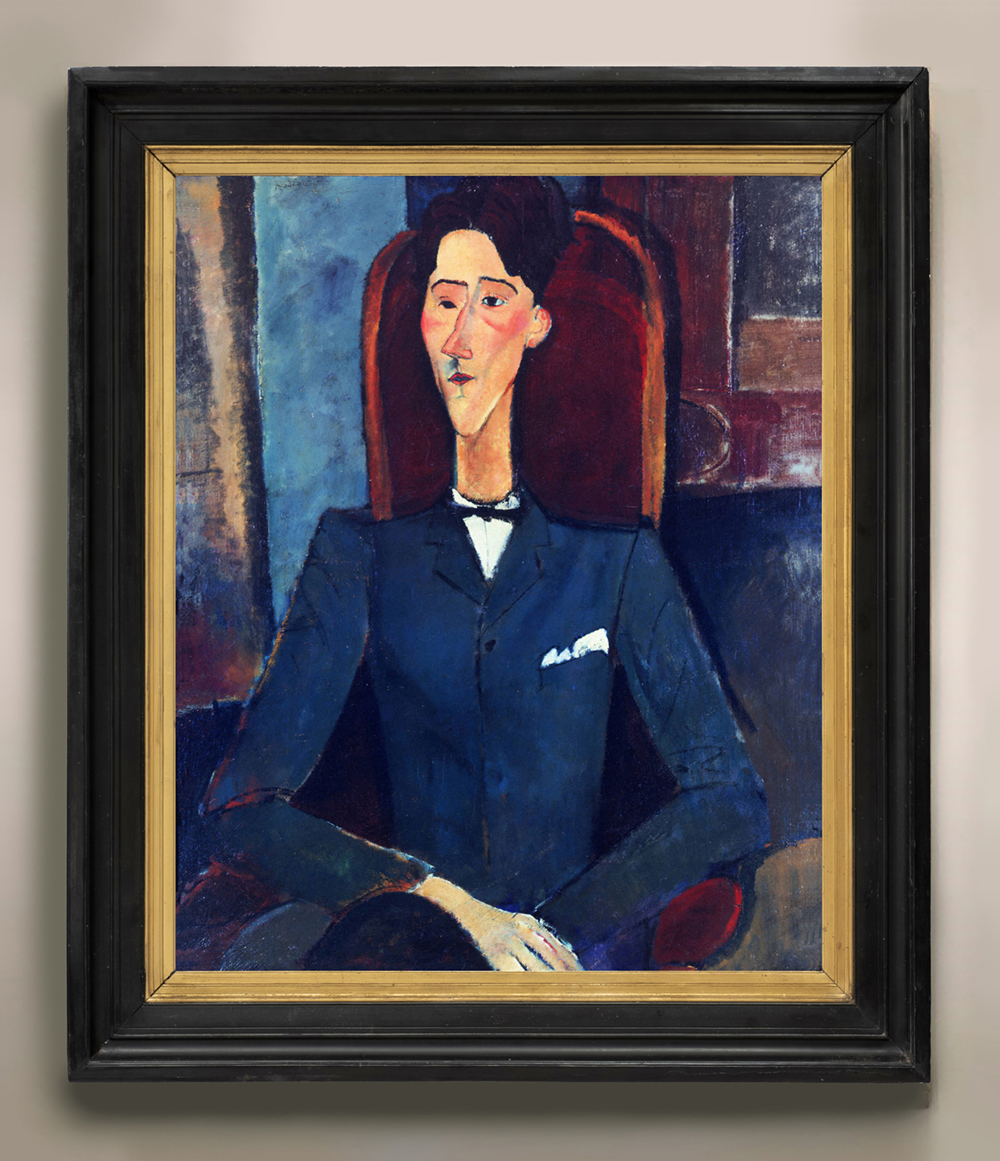
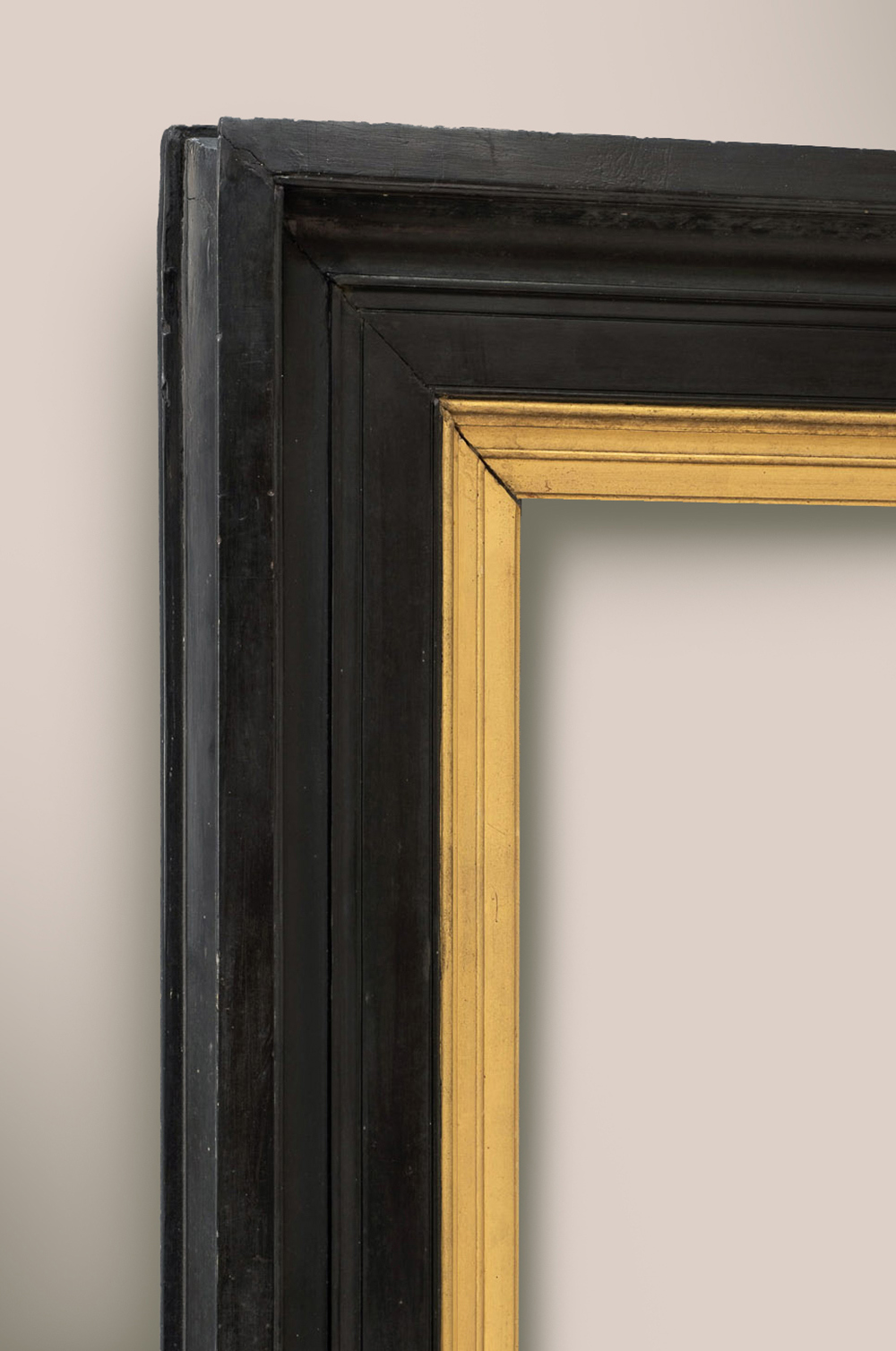
A rare example of a Parisian NeoClassical revival Salon frame, last quarter 19th century, with concave profile and stepped frieze, finished with original black paint and parcel-gilding
Finally, however, the Museum chose a frame which, although it combines an undecorated façade with a similar profile - a hollow with a frieze - as the two white frames, along with a painted finish, also bridges the gap between artists' and Salon frames. Another example of this style is found on Eugène Laermans, The end of autumn or The blind, 1899, Musée d'Orsay . It is likely to date from the change in regulations in the 1880s which allowed ebonized frames into the Salon, and it combines a classicizing structure with an interestingly detailed inner frieze: a wide gilded band delimited by a small astragal-&-ogee, with a minimal relief moulding in the centre and a tiny cavetto at the sight edge. This arrangement mimics on a smaller scale the mouldings of the black outer frame. The combination captures the formality of Cocteau's self-presentation; the contrasts of dark suit and white shirt, and black hair with light olive skin. It also enhances the princely pose and touch of arrogance; once in place, the black-&-gold combination seems such an organic part of the painting that it confirms Modigliani's slightly cynical vision of Cocteau as a Medici in the field of the arts.
An exhibition, Village Square: gifts of Modern Art from the Pearlman Collection to the Brooklyn Museum, LACMA, and MoMA, will take place at the Los Angeles County Museum of Art from February-July 2026.
1[1] See Christine Traber, 'In perfect harmony? Escaping the frame in the early 20th century', In perfect harmony, ed. Eva Mendgen, 1995, p. 235
1[2] Isabelle Cahn, Cadres de peintres, 1989, p. 27
Categories
- Articles on multiple aspects of European frames
- Recent framing projects undertaken by Paul Mitchell Ltd